 Join The Club





And lo, on the ninth day of the ninth month in the 2025th year, verily did Apple unveil the 17th coming of the hallowed iPhone. Yup, there's yet another iPhone out, the iPhone 17 Pro, and if the numbering scheme isn't flirting with satire, the extent to which Apple's latest iPhone resembles a gaming PC surely is.
Don't believe me? If I told you there was a new device selling for four figures with a high-Hz, adaptive refresh screen, backed by a sales pitch that name-checks "AAA gaming" and "hardware-accelerated ray tracing" and which introduces tensor cores to its newly upgraded GPU, what would you say it was?
Article continues below 
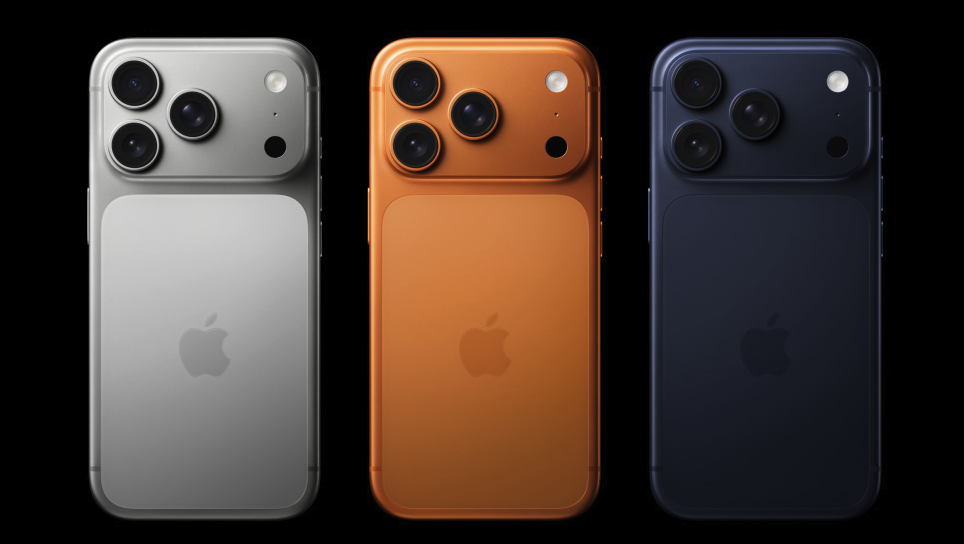
Apple doesn't actually get specific about what those "Neural Accelerators" will be used for as distinct from the NPU. But if Apple wanted to support, say, ML-enhanced upscaling, doing that on the GPU rather than NPU has clear advantages when it comes to things like frame-time and latency. Again, that's pretty reminiscent of a gaming PC.
Of course, the PC got there first with all this stuff, be it the vapor chamber, the high-refresh display or the AI GPU cores and support for ray-tracing. But, personally, I don't get most of it on a smartphone.
The 120 Hz display is nice enough and will make the phone feel responsive. But ray tracing and a vapor chamber? Gaming on such a small device is never going to be about high-end visuals. I'd far rather have a bit less performance and a lot more battery life. Does an iPhone really need or benefit from that kind of extreme cooling?
In that regard and many others, too, the more apt comparison is obviously the Steam Deck as opposed to a desktop rig. The Deck, too, isn't about the very latest features or the last word in ray tracing. Actually, the Deck doesn't have vapor chamber cooling. And the iPhone probably shouldn't, either.

1. Best overall:
Lenovo Legion Go S SteamOS ed.
2. Best budget:
Steam Deck
3. Best Windows:
MSI Claw 8 AI+
4. Best big screen:
Lenovo Legion Go
5. Best compact:
Ayaneo Flip DS
You must confirm your public display name before commenting
Please logout and then login again, you will then be prompted to enter your display name.