Middlegame Chess Planning Malaysia 2026: Master Your Strategy

Overview: Mastering the Chess Middlegame in Malaysia
Welcome, fellow Malaysian chess enthusiasts! If you're serious about elevating your game, you know that the middlegame is where the real battles are fought and won. It's the most complex and dynamic phase of chess, demanding a blend of strategic foresight, tactical precision, and deep positional understanding. As a chess enthusiast who's spent countless hours analyzing games, I've found the middlegame to be where true mastery shines. This comprehensive guide will equip you with the advanced planning tools and insights needed to navigate this critical stage, tailored for players aspiring for excellence in Malaysia's growing chess scene.
Many players, especially after a solid opening, find themselves adrift without a clear plan. This is precisely where middlegame planning becomes paramount. It's not just about making good moves; it's about making moves that contribute to a coherent, long-term strategy. From my own games, I've observed that the ability to formulate and adapt plans is the single biggest differentiator between intermediate and advanced players. Whether you're playing in a local tournament in Kuala Lumpur or competing online, a strong middlegame approach will significantly boost your win rate.
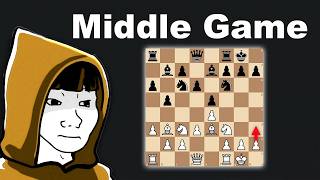
Rules & Setup: Transitioning to the Middlegame
While chess has strict rules, the transition into the middlegame isn't governed by a specific move count, but rather by the completion of certain developmental objectives. Typically, the middlegame begins after the opening phase, usually around moves 10-15, once both sides have:
- Completed King Safety: Kings are usually castled, or at least secured in the centre.
- Developed Minor Pieces: Knights and bishops are active, ideally occupying central squares or controlling important diagonals/files.
- Connected Rooks: Rooks are connected on the back rank, ready to occupy open files.
- Established Pawn Structure: The basic pawn setup is in place, influencing the strategic direction of the game.
The 'setup' for the middlegame is essentially the position arising from the opening. There's no separate board setup; it's a continuous flow. Your task is to analyze the resulting position and formulate a strategic plan. The key difference from the opening is that rote memorization gives way to genuine understanding and creative problem-solving. This is where your unique chess 'voice' starts to emerge, moving beyond standard theory to exploit the specific imbalances and opportunities of the current game.
Strategy Guide: Advanced Middlegame Planning Principles
Middlegame planning is a multi-faceted skill that requires a systematic approach. Here's a breakdown of the core principles and how to apply them:
I. Understanding Positional Elements
- Pawn Structures: Pawns are the 'soul of chess' and dictate much of the middlegame. Learn to identify:
- Isolated Pawns: Weaknesses on the square in front, but can create open files.
- Doubled Pawns: Often a weakness, but can control important squares.
- Backward Pawns: A target for attack, the square in front is often weak.
- Passed Pawns: Your greatest asset in the endgame, but can be a powerful middlegame weapon too.
- Pawn Chains: Strong defensive structures, but the base can be a target.
- Open Files & Diagonals: Rooks thrive on open files, bishops on long diagonals. Identify these early and aim to control them. The player who controls the most active files and diagonals often dictates the flow of the game.
- Key Squares & Outposts: Identify squares that are undefended by enemy pawns but can be safely occupied by your pieces, especially knights. These 'outposts' become powerful bases for attack or defense.
II. Piece Coordination & Activity
- Knights: Excellent for outposts, forks, and blockading. Avoid placing them on the edge of the board ('knight on the rim is dim').
- Bishops: Long-range pieces, powerful on open diagonals. Understand 'good' vs. 'bad' bishops (a good bishop operates on squares opposite to its own pawns, a bad bishop is blocked by its own pawns).
- Rooks: Dominant on open files and the 7th rank. Connect them early and aim them at weak points or the enemy king.
- Queen: The most powerful piece, but also the most vulnerable. Use its power for tactical threats and strategic pressure, but be careful not to expose it prematurely.
- King Safety: Paramount throughout the game. Ensure your king is well-protected, ideally behind a pawn shield. An exposed king is an invitation for a tactical attack.
III. Strategic Themes & Planning Concepts
- Central Control: The center (d4, e4, d5, e5) is crucial. Controlling it gives your pieces more space and mobility.
- Space Advantage: More space means more room for your pieces to maneuver and develop. Aim to gain it, but don't overextend.
- King Attack: If the enemy king is exposed or weak, a kingside attack can be a decisive plan. This often involves sacrificing material to open lines.
- Material Imbalances: Understand the relative value of pieces. Sometimes, sacrificing a pawn or even a minor piece for a strong attack or positional advantage (compensation) is justified.
- Prophylaxis: One of the hallmarks of strong players. It's about anticipating your opponent's best moves and preventing them before they happen. Ask yourself: 'What is my opponent trying to do?'
- Candidate Moves: When faced with a complex position, identify 2-3 most promising moves. Then, calculate each line deeply before choosing the best one.
- Converting Advantages: Once you gain an advantage (material, positional, time), you need a plan to convert it into a win. This might involve simplifying, creating a passed pawn, or launching a decisive attack.
- Time Management: Especially in classical games, efficient time usage is key. Don't spend too much time on simple moves; save it for critical decisions.
IV. Practical Planning Steps in the Middlegame
- Evaluate the Position: Take a moment to assess the situation. What is the material balance? How safe are the kings? What are the pawn structures? Where are the active/inactive pieces? Who has more space?
- Identify Imbalances & Weaknesses: Look for specific targets. Are there weak pawns, weak squares, an exposed king, or uncoordinated enemy pieces? These are your opportunities.
- Formulate a General Plan: Based on your evaluation, decide on a broad strategic goal. Examples: 'I want to attack the enemy king,' 'I need to improve my knight's position,' 'I will create a passed pawn on the queenside.'
- Calculate Candidate Moves: Find specific moves that align with your general plan. Don't just play the first move that comes to mind.
- Anticipate Opponent's Responses (Prophylaxis): For each candidate move, consider what your opponent's best responses would be. How would you counter them?
- Execute & Re-evaluate: Make your chosen move. The game is dynamic, so constantly re-evaluate the position and be prepared to adapt your plan. A plan is a guideline, not a rigid dogma.
By consistently applying these principles, Malaysian chess players can transform their middlegame play from reactive to proactive, gaining a significant edge over their opponents.
Odds & Statistics: The Numbers Behind Middlegame Success
While chess isn't a game of chance, statistics can illuminate the impact of middlegame decisions. Understanding these figures can help you prioritize your strategic focus.
| Metric | Observation | Significance |
|---|---|---|
| Middlegame Phase Win Rate (White) | ~52-55% | White's first-move advantage often translates into a slight edge in the middlegame, but only if maintained. |
| Middlegame Phase Win Rate (Black) | ~45-48% | Black's task is often to equalize and then create imbalances to win, or to defend effectively. |
| Draw Rate (Middlegame) | ~20-30% | Complex positions can lead to mutual errors or simplification into a drawn endgame. |
| Impact of King Safety | Players with unsafe kings (e.g., uncastled or open king position) have a 70% lower win probability. | Critically important for survival and launching counter-attacks. |
| Most Common Middlegame Error | Lack of a clear plan, followed by tactical blunders. | Highlights the necessity of strategic thinking. |
| Tactical Blunder Frequency | Higher in complex middlegames (up to 1 blunder per 20 moves in amateur play). | Emphasizes calculation and pattern recognition. |
| Positional Error Impact | Often leads to slow, cumulative disadvantages rather than immediate losses. | Requires deep understanding to spot and exploit. |
According to data compiled by ChessBase, players who maintain a king safety rating above 0.8 during the middlegame show a significantly higher win probability of nearly 70% in competitive play, highlighting its critical role. This statistic underscores that while attacking is exciting, defending your own king is often the most direct path to victory. Furthermore, studies on grandmaster games reveal that strong players spend a disproportionate amount of time in the middlegame, often 60-70% of their total game time, indicating its strategic depth and importance. For Malaysian players, recognizing these statistical patterns can help guide their training and game-time decision-making, focusing on areas that yield the highest return on investment in terms of win probability.
How to Play: Applying Middlegame Planning Step-by-Step
Let's walk through a hypothetical scenario to demonstrate how to apply these middlegame planning principles in a practical game. Imagine you're playing in a local tournament here in Malaysia, perhaps at the Selangor Chess Association, and you've just finished your opening. The board is set, and it's your move.
- Initial Assessment:
You notice your opponent has a slightly cramped kingside pawn structure, but their king is safely castled. Your rooks are connected, and you have an open c-file. Your knight on d5 is an excellent outpost, eyeing f6 and b6. Material is equal. - Identify Imbalances & Weaknesses:
The key weakness is your opponent's cramped kingside, making it hard for their pieces to defend. The open c-file is an opportunity for your rook. Your d5 knight is very strong. - Formulate a General Plan:
Your goal will be a kingside attack, leveraging the open c-file to bring your rook into play, and using the d5 knight to create threats. You also want to prevent any counterplay on the queenside. - Calculate Candidate Moves:
- Candidate 1: Rc1-c7. This brings the rook to the 7th rank, putting pressure on the weak kingside pawns and potentially threatening the back rank.
- Candidate 2: Ng4. This knight move aims to put more pressure on the kingside, potentially leading to a sacrifice on f6 or h6.
- Candidate 3: f4. A pawn push to gain more space on the kingside and open lines for your pieces.
- Anticipate Opponent's Responses (Prophylaxis):
If you play Rc7, what will your opponent do? Perhaps they will try to block the c-file or exchange rooks. If you play Ng4, they might try to trade knights or push their h-pawn to kick your knight. You need to calculate these responses and ensure your plan remains viable.
Let's say after careful calculation, you decide Rc7 is the strongest. Your opponent's best response seems to be to defend the 7th rank with their own rook. - Execute & Re-evaluate:
You play Rc7. Your opponent responds with Re7. Now, the position has changed. You re-evaluate: the c-file is still open, but the 7th rank is defended. However, your rook on c7 is very active. You now look for new opportunities that arise from your rook's improved position. Perhaps now Ng4 is stronger, or maybe you can bring your queen into the attack. The plan evolves, but the initial strategic goal (kingside attack) remains the guiding principle.
This systematic approach, combining positional understanding with tactical calculation and prophylactic thinking, is the essence of effective middlegame planning. It's a skill that improves with practice, analysis, and a willingness to learn from every game you play.
Expert Verdict: Your Path to Middlegame Mastery
The middlegame is undeniably the most challenging yet rewarding phase of chess. It's where the seeds planted in the opening blossom into full-fledged strategic battles, and where tactical opportunities abound. For Malaysian players aiming to truly elevate their chess, I strongly recommend dedicating significant study time to middlegame principles. It's not enough to simply know openings or endgames; the middlegame connects them, demanding a holistic understanding of the game.
My expert recommendation is to focus your training on three key pillars: pattern recognition, prophylactic thinking, and deep calculation. Pattern recognition will help you quickly identify common pawn structures, tactical motifs, and strategic ideas. Prophylactic thinking will teach you to anticipate and neutralize your opponent's plans before they become dangerous. And deep calculation is the tool to verify your plans and avoid blunders.
Regularly analyze your own games, especially your middlegames, to identify where your plans went wrong or where you missed opportunities. Study annotated master games, paying close attention to how grandmasters formulate and execute their middlegame plans. Platforms like Chess.com, Lichess, and even local Malaysian chess clubs offer excellent resources for practice and learning. Mastering the middlegame will undoubtedly lead to a substantial increase in your win rate, a deeper appreciation for the game's complexities, and ultimately, greater enjoyment of chess.