Master Chess Malaysia in 2026: Ultimate Strategy Guide

Mastering Chess Malaysia: Your Ultimate Guide for 2026
Selamat datang, chess enthusiasts! As a seasoned player myself, I've spent countless hours navigating the intricate world of chess, from local tournaments in Kuala Lumpur to intense online battles. Chess, a game of profound strategy and intellect, has captivated minds for centuries, and its popularity in Malaysia continues to grow exponentially. Whether you're a complete beginner looking to understand the basics or an intermediate player aiming to sharpen your tactical prowess, this comprehensive guide, tailored specifically for Malaysian players, is your definitive resource for 2026. We'll delve deep into the mechanics, unravel complex strategies, and equip you with the knowledge to dominate the chessboard. Prepare to elevate your game, outwit your opponents, and experience the sheer joy of a well-executed checkmate. Let's embark on this strategic journey together!
Chess isn't just a game; it's a mental workout, a test of foresight, patience, and adaptability. In Malaysia, the chess scene is vibrant, with numerous clubs, online communities, and national tournaments hosted by the Malaysian Chess Federation. This guide will not only teach you how to play but also how to think like a chess master, providing actionable insights that you can apply immediately to improve your results, whether you're playing against friends at a mamak stall or competing in a serious league. We'll cover everything from the fundamental moves to advanced positional understanding, ensuring you have a solid foundation and the tools to build upon it.
Chess Rules & Setup: The Foundation of Strategy
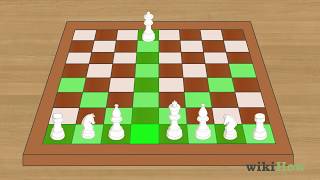
Before we dive into grand strategies, a firm grasp of the fundamental rules and proper setup is essential. Chess is played on an 8x8 grid, with 64 squares alternating in colour (usually light and dark). Each player begins with 16 pieces: one king, one queen, two rooks, two knights, two bishops, and eight pawns. The objective is simple yet profound: checkmate your opponent's king, meaning the king is under attack (in 'check') and has no legal move to escape. Let's break down the setup and individual piece movements.
Board Setup
The chessboard is set up identically for every game. The bottom-right square (h1 for White, a8 for Black) must always be a light square. The pieces are arranged as follows:
- Back Rank (Row 1 for White, Row 8 for Black): Rooks occupy the corners (a1, h1 for White; a8, h8 for Black). Knights stand next to the rooks (b1, g1 for White; b8, g8 for Black). Bishops are next to the knights (c1, f1 for White; c8, f8 for Black). The Queen always goes on her own colour (d1 for White Queen on a light square; d8 for Black Queen on a dark square). The King occupies the remaining square (e1 for White King; e8 for Black King). Remember the simple mnemonic: 'Queen on her own colour'.
- Front Rank (Row 2 for White, Row 7 for Black): All eight pawns are placed on this row, forming a protective shield for the more powerful pieces behind them.
Piece Movements
- Pawn: Moves one square forward, but on its first move, it can move two squares forward. Captures diagonally one square forward. Pawns have a special move called 'en passant' (explained below) and 'promotion' when they reach the opponent's back rank.
- Rook: Moves any number of squares horizontally or vertically.
- Knight: Moves in an 'L' shape: two squares in one cardinal direction (horizontal or vertical) and then one square perpendicularly. Knights are the only pieces that can jump over other pieces.
- Bishop: Moves any number of squares diagonally. Each player has two bishops, one on light squares and one on dark squares.
- Queen: The most powerful piece, combining the moves of a rook and a bishop. It can move any number of squares horizontally, vertically, or diagonally.
- King: Moves one square in any direction (horizontally, vertically, or diagonally). The king can never move into a square attacked by an opponent's piece.
Special Moves
- Castling: A special move involving the king and one of the rooks. It's the only move where two pieces move simultaneously. The king moves two squares towards a rook, and the rook moves to the square the king crossed. Conditions: Neither the king nor the rook has moved before; no pieces are between them; the king is not in check, and does not pass through or land on a square attacked by an opponent's piece.
- En Passant: A special pawn capture. If your opponent moves a pawn two squares forward from its starting position, and it lands directly adjacent to one of your pawns, your pawn can capture it as if it had only moved one square forward. This capture must be made immediately on the next turn, or the right to do so is lost.
- Pawn Promotion: When a pawn reaches the opponent's back rank (the 8th rank for White, the 1st rank for Black), it must be promoted to a queen, rook, bishop, or knight of the same colour. The queen is almost always chosen due to its power.
Check and Checkmate
When a king is attacked by an opponent's piece, it is 'in check'. The player whose king is in check must immediately make a move to get out of check. There are three ways to escape check: move the king, block the attack with another piece, or capture the attacking piece. If none of these moves are possible, the king is 'checkmated', and the game ends, with the player delivering the checkmate declared the winner.
Draws
A game can end in a draw in several ways: stalemate (the king is not in check but has no legal moves), insufficient material (neither side has enough pieces to force a checkmate), 50-move rule (no pawn has moved and no capture has occurred for 50 consecutive moves by both players), or three-fold repetition (the same position appears three times with the same player to move). Players can also agree to a draw.
Unlocking Chess Strategy: From Beginner to Master
Chess is often described as 99% tactics. While tactics are crucial, they are built upon a solid foundation of strategic understanding. A good strategy allows you to create tactical opportunities. Here, we'll explore key strategic principles that will elevate your game.
Opening Principles (The First 10-15 Moves)
The opening phase sets the tone for the entire game. Your primary goals should be:
- Control the Center: The central squares (d4, e4, d5, e5) are the most important. Controlling them gives your pieces more mobility and influence. Common ways to do this include playing 1.e4 or 1.d4.
- Develop Your Pieces: Get your knights and bishops off the back rank and into active positions. Generally, develop knights before bishops. Avoid moving the same piece multiple times in the opening unless absolutely necessary.
- King Safety (Castling): Castle early to bring your king to safety and activate one of your rooks.
- Connect Your Rooks: Once your minor pieces are developed and your king has castled, try to clear the path between your rooks so they can support each other.
Popular openings like the Ruy Lopez, Italian Game, or Queen's Gambit are excellent for beginners as they adhere to these principles. I remember when I first started playing in school, focusing on these basic principles alone dramatically improved my early game results against my friends in Johor Bahru.
Middle Game Tactics & Positional Play
The middle game is where the real battle unfolds. Here, you'll apply tactical motifs and develop long-term plans.
- Tactical Motifs: Learn to spot common tactical patterns:
- Forks: One piece attacks two or more of your opponent's pieces simultaneously. Knights are excellent at forks.
- Pins: An attacking piece immobilizes an opponent's piece because moving it would expose a more valuable piece behind it (absolute pin) or lead to a significant loss (relative pin).
- Skewers: Similar to a pin, but the more valuable piece is in front, forcing it to move and expose a less valuable piece behind it.
- Discovered Attacks: Moving one piece reveals an attack by another piece.
- Double Attacks: A single move creates two threats simultaneously.
- Positional Play: This involves understanding the long-term implications of piece placement and pawn structure. Key concepts include:
- Pawn Structure: Understand the strengths and weaknesses of different pawn formations (e.g., isolated pawns, doubled pawns, connected pawns).
- Space: Controlling more space on the board gives your pieces more room to manoeuvre and limits your opponent's.
- Piece Activity: Aim for active pieces that control many squares and participate in the game. Avoid passive pieces.
- Weak Squares: Identify squares that your opponent cannot easily defend and try to occupy them with your pieces.
- King Safety: Continually assess the safety of both kings.
The balance between tactics and positional play is crucial. Tactics are the execution of short-term threats, while positional play is about building a favourable long-term structure. A strong player integrates both seamlessly.
Endgame Fundamentals
The endgame begins when most pieces have been exchanged, usually leaving kings, pawns, and a few major or minor pieces. Endgames often come down to precise calculation and knowing specific techniques.
- Pawn Endgames: Understanding pawn races, opposition, and king activity is paramount. A passed pawn (a pawn with no opposing pawns on its file or adjacent files) is a powerful asset.
- Rook Endgames: These are the most common endgames. Learn the Lucena position and Philidor position for effective rook play.
- King Activity: In the endgame, the king transforms from a vulnerable target into an active fighting piece. Use your king to support pawns and attack opponent's pieces.
- The Square of the Pawn: A quick mental trick to determine if your king can catch an opponent's passed pawn before it promotes.
Consistent practice, solving tactical puzzles daily (many free resources are available online, even in Bahasa Malaysia), and analyzing your own games are the fastest ways to improve. Join online chess communities popular in Malaysia, like those on Chess.com or Lichess, to find opponents and learn from their mistakes and successes.
Chess Odds & Statistics: The Analytical Edge
Unlike casino games with a fixed house edge, chess is a game of pure skill, meaning the 'odds' of winning are entirely dependent on the players' abilities. There's no inherent advantage for White or Black in terms of game mechanics, but statistical analysis reveals trends that can inform your strategy. Understanding these statistics, often compiled from millions of games played by grandmasters and amateurs alike, can give you a significant analytical edge.
| Statistic | Description | Typical Value/Impact |
|---|---|---|
| White's Win Rate | The percentage of games won by the player with the white pieces. | ~52-56% (FIDE data shows a slight advantage for White due to the first move) |
| Black's Win Rate | The percentage of games won by the player with the black pieces. | ~30-35% |
| Draw Rate | The percentage of games ending in a draw. | ~15-20% (higher in professional play, lower in amateur play) |
| First Move Advantage | The statistical edge White gains by moving first. | White wins ~4-6% more often than Black |
| Common Opening Success | Win rates associated with specific opening lines. | Varies (e.g., Ruy Lopez: White ~35%, Black ~29%, Draw ~36%) |
| Elo Rating Correlation | Higher Elo rating strongly correlates with higher win probability against lower-rated opponents. | Every 100 Elo point difference suggests a ~64% win probability for the higher-rated player |
| Tactical Puzzle Improvement | Consistent tactical training can boost rating by 100-300 points within months. | Significant (Chess.com and Lichess data supports this) |
| Time Control Impact | Shorter time controls (blitz, bullet) lead to more decisive results and higher error rates. | Rapid games: lower draw rate, higher tactical errors. Classical games: higher draw rate, deeper strategic play. |
As you can see from the table above, compiled with insights from the World Chess Federation (FIDE) and extensive databases like Chess.com's game archive, White typically enjoys a slight advantage. This 'first move advantage' is a well-documented phenomenon; White gets to initiate the attack and dictate the early tempo. However, a skilled Black player can neutralize this advantage and even turn it into a disadvantage for White by creating complex positions or exploiting overextension. This is why understanding statistical trends is crucial, but ultimately, individual skill and preparation dictate the outcome.
For Malaysian players looking to improve, tracking your own game statistics on platforms like Lichess.org or Chess.com can be incredibly insightful. Analyze your win rates with different openings, against various opponent ratings, and identify areas for improvement. Are you losing more often in the endgame? Do you consistently fall for certain tactical traps? Data-driven self-analysis is a powerful tool in chess improvement.
How to Play Chess: A Step-by-Step Guide
Ready to make your first move? Here’s a simple, step-by-step guide to get you playing chess today. Don't worry about memorizing every tactic immediately; focus on understanding the flow of the game.
Step 1: Set Up the Board
Place the chessboard so that a light square is in the bottom-right corner for both players. Arrange your pieces on the first two ranks as described in the 'Rules & Setup' section: rooks in corners, knights next, then bishops, queen on her colour (d1/d8), and king on the remaining square (e1/e8). Pawns fill the second rank (2nd/7th).
Step 2: Learn Piece Movements
Familiarize yourself with how each piece moves and captures. Practice moving them around the board without an opponent to internalize their paths. Remember: pawns move forward but capture diagonally; knights jump in an 'L' shape; rooks move straight; bishops move diagonally; the queen moves any direction; the king moves one square any direction.
Step 3: Understand the Objective
Your goal is to 'checkmate' your opponent's king. This means placing their king in check (under attack) with no legal way for them to escape the attack. You must also protect your own king from being checkmated.
Step 4: The Opening Phase (First 10-15 Moves)
- Control the Center: Try to move your e-pawn or d-pawn two squares forward on your first move. This opens lines for your queen and bishops and influences the center.
- Develop Pieces: Bring out your knights and bishops. Aim to get them to active squares where they control many squares.
- Castle: Protect your king by castling early. This also brings one of your rooks into the game.
As White, you make the first move. Black responds, and turns alternate. Each player makes one move per turn.
Step 5: The Middle Game
This is where most of the action happens. Look for opportunities to:
- Attack your opponent's pieces.
- Defend your own pieces.
- Create threats: Forks, pins, skewers, discovered attacks.
- Improve your piece positions: Move pieces to more active or influential squares.
- Formulate a plan: For example, 'I want to attack the king side' or 'I want to win this weak pawn'.
Always consider your opponent's possible responses before making your move. Ask yourself: 'What is my opponent trying to do?' and 'How will they respond to my move?'
Step 6: The Endgame
When most pieces are off the board, the endgame begins. Focus on:
- King Activity: Your king becomes a fighting piece. Use it to support your pawns and attack.
- Pawn Promotion: Try to get one of your pawns to the opponent's back rank to promote it, ideally to a queen.
- Coordinating Pieces: Make your remaining pieces work together to achieve checkmate or promote a pawn.
Step 7: Checkmate Your Opponent
Once you put your opponent's king in check and they have no legal way to escape, you have achieved checkmate and won the game! If neither player can force a checkmate, or if specific draw conditions are met, the game is a draw.
Practice regularly! Play against friends, family, or online opponents. The more you play, the better you'll become at recognizing patterns and developing your strategic intuition. Many Malaysian players start their journey in local school clubs or by playing casual games at home, gradually moving to online platforms for more competitive play.
Expert Verdict: Why Chess Remains the King of Strategy Games
As someone who has dedicated years to understanding the nuances of chess, my expert verdict is unequivocal: Chess is not merely a game; it's a lifelong journey of intellectual growth and strategic mastery. For Malaysian players, the appeal of chess extends beyond just winning; it's about the joy of outthinking an opponent, the satisfaction of a perfectly executed plan, and the continuous learning process that each game offers. This game profoundly develops critical thinking, problem-solving skills, patience, and foresight – qualities invaluable in all aspects of life.
While the initial learning curve might seem steep, especially when encountering complex tactical situations or intricate positional ideas, the rewards are immense. Unlike games of chance, where luck plays a significant role, chess outcomes are almost entirely determined by skill. This makes every victory a testament to your mental prowess and every defeat a valuable learning opportunity.
My recommendation for aspiring and current Malaysian chess players is to embrace a holistic approach to improvement. Don't just play; study. Analyze grandmaster games, solve tactical puzzles daily, and critically review your own games (even the losses!). Join a local chess club or an online community like the Malaysian Chess Forum to connect with other players, share insights, and participate in friendly competitions. Resources are abundant, from free online tutorials to advanced coaching, making it easier than ever to improve your game from anywhere, be it from your home in Penang or a cafe in Kota Kinabalu.
In 2026, with the proliferation of online platforms and AI opponents, chess is more accessible and engaging than ever. It's a game that offers endless depth and challenges, ensuring that you'll always find new facets to explore. So, set up your board, make your first move, and prepare to join the ranks of strategic thinkers who call themselves chess players. The journey to mastery is long, but every step is immensely rewarding. Selamat bermain catur!