Chess Calculation Basics Malaysia: Master Your Moves by 2026

Overview: The Power of Calculation
Selamat datang, Malaysian chess enthusiasts! Whether you're a seasoned player or just starting your journey on the 64 squares, one skill consistently separates the good from the great: calculation. It's the ability to foresee sequences of moves, anticipate your opponent's responses, and accurately evaluate the resulting positions, all before making your first move. This isn't some mystical talent reserved for Grandmasters; it's a fundamental, learnable skill that, when honed, will dramatically elevate your game.
For many Malaysian players, the initial focus is often on opening theory or basic tactical patterns. While these are crucial, true improvement comes from systematically calculating variations. I remember struggling with calculation early in my chess journey, often falling into simple traps or missing winning opportunities because I hadn't looked deep enough. This guide is designed to equip you with the foundational principles and practical techniques needed to develop robust calculation skills, tailored for our local chess community, ensuring you have a clear path to becoming a more precise and powerful player. Get ready to transform your chess thinking!
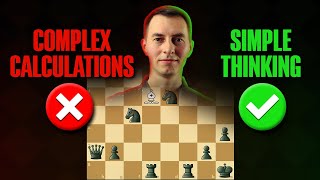
Calculation isn't merely about finding the longest sequence of moves; it's about finding the *best* sequence, the one that leads to a favorable outcome for you and an unfavorable one for your opponent. It involves a mix of analytical rigor, pattern recognition, and disciplined mental focus. This guide will serve as your blueprint to developing these critical attributes. By the end, you'll have a clearer understanding of how to approach complex positions, identify critical moves, and confidently navigate the intricate pathways of a chess game, making you a formidable opponent in any Malaysian chess club or online tournament.
Foundations: Rules & Setup for Calculation
Before we dive deep into the intricacies of chess calculation, it’s essential to ensure we’re all on the same page regarding the fundamental rules of chess. While this guide assumes a basic understanding of how pieces move, a brief recap helps set the stage for applying calculation techniques. Chess is played on an 8x8 grid, with 32 pieces – 16 for each player (White and Black). Each side starts with a King, Queen, two Rooks, two Knights, two Bishops, and eight Pawns. The objective is to checkmate your opponent's King, meaning the King is under attack (in 'check') and has no legal move to escape the attack.
Understanding piece movements is the absolute prerequisite for calculation. You cannot accurately foresee future positions if you're unsure how a Knight jumps or how a Bishop controls diagonals. Each piece has a unique way of moving, capturing, and influencing the board: the Rook moves horizontally and vertically, the Bishop diagonally, the Queen combines both, the Knight moves in an 'L' shape, and the Pawn moves forward one square (two on its first move) and captures diagonally. The King moves one square in any direction. Special moves like castling and en passant also need to be understood, as they can often be critical elements in tactical sequences you need to calculate.
Calculation fundamentally relies on visualizing these piece movements multiple moves ahead. When you calculate, you're essentially playing out mini-games in your mind. You imagine a piece moving, then your opponent's response, then your next move, and so on. This mental simulation requires a solid grasp of the board's mechanics. Without it, your calculations will be riddled with errors, leading to missed opportunities or, worse, blunders. So, ensure your basic knowledge of piece movement, capturing rules, and special moves like castling is rock-solid. Think of it as the 'ABC' before you can write a novel – you need to know the letters before you can construct complex sentences. Only then can you truly begin to build a robust calculation framework that will serve you well in any chess match, from a casual game with friends in Penang to a serious competition in Kuala Lumpur.
The setup of the board is also crucial for calculation, especially in the opening. Knowing where pieces typically belong and how they interact in standard opening positions helps you identify common tactical motifs and potential targets for calculation. For instance, an uncastled King or an undefended piece often becomes the focus of tactical calculation. Understanding the initial position and how it evolves through the opening phases provides the context for your calculations. As you progress, you'll learn to recognize patterns and typical structures that guide your calculation efforts, making the process more efficient and accurate. This foundational knowledge is the bedrock upon which all advanced calculation techniques are built.
Core Strategy: Mastering Chess Calculation
Mastering chess calculation is not about having a supercomputer brain; it's about developing a structured, systematic approach to analyzing positions. Here in Malaysia, many aspiring players often try to calculate everything, leading to mental fatigue and errors. The key is smart calculation, focusing your energy where it matters most. Let's break down the core principles:
1. Identify Candidate Moves:
Don't try to calculate every single legal move. Start by identifying 2-4 'candidate moves' for your side. These are moves that look promising, either because they create threats, improve your position, or react to your opponent's threats. Then, for each of your candidate moves, identify your opponent's most likely (and strongest) responses.
2. Focus on Forced Variations (Checks, Captures, Threats - CCT):
This is the golden rule of calculation. Sequences involving checks, captures, and direct threats (CCT) are often the most forcing and easiest to calculate accurately because they limit your opponent's options. Always start your calculation with these types of moves for both sides. If you see a check, calculate its consequences first. If there's a capture, see where it leads. If there's an immediate threat, analyze its implications. This systematic approach helps prune unnecessary branches in your calculation tree.
3. Visualize Accurately:
This is perhaps the hardest part. You need to mentally move the pieces on the board without physically touching them. Practice visualizing positions several moves ahead. Start with simple 2-3 move sequences and gradually increase the depth. Many Malaysian chess coaches recommend using a physical board and then trying to solve puzzles without moving pieces, only visualizing. The more you practice, the clearer your mental board will become.
4. Evaluate the End Position:
After calculating a sequence of moves, you must evaluate the final position. Is your King safer? Do you have more material? Is your position more active? This evaluation helps you decide if the calculated line is good or bad. Don't just calculate to the end of a sequence; calculate to a clear evaluation point. This is where strategic understanding blends with tactical calculation.
5. Pruning and Depth vs. Breadth:
You can't calculate every variation to the end of the game. 'Pruning' means eliminating lines that clearly lead to a bad outcome early in the calculation. Focus your mental energy on the most promising lines. As for depth (how many moves ahead) vs. breadth (how many variations), it's a balance. For critical positions, you might need deep calculation (5-7 moves). For quieter positions, a broader look at 2-3 moves might suffice. A good rule of thumb is to calculate one move deeper than your opponent's strongest response.
6. Practical Tips for Malaysian Players:
- Puzzle Solving: Regularly solve tactical puzzles. Websites and apps like Chess.com, Lichess, and Chessable offer excellent tactical training modules. This is one of the most effective ways to improve calculation.
- Analyze Your Games: After each game, especially losses, review your moves without an engine first. Try to identify where your calculation went wrong. Did you miss a forcing move? Did you miscalculate an opponent's reply?
- Slow Down: Especially in classical or rapid games, take your time. Don't rush a move. Use your allotted time to calculate thoroughly. Many blunders happen due to impatience.
- Speak Out Loud (if alone): Sometimes, verbally describing the moves you're calculating can help organize your thoughts and catch errors.
By integrating these principles into your chess routine, you'll notice a significant improvement in your ability to calculate accurately and efficiently. This methodical approach is what truly unlocks your chess potential, helping you navigate complex positions with confidence and precision, whether you're playing at home in Johor Bahru or competing in a national event.
The Numbers Game: Odds & Statistics in Chess
Unlike casino games where 'house edge' dictates the inherent disadvantage, chess is a zero-sum game between two players, meaning there's no house and thus, a 0% house edge. The \"odds\" in chess refer more to the statistical probabilities of winning, drawing, or losing based on factors like material advantage, positional strength, and crucially, tactical accuracy. Understanding these statistics can provide valuable insights into the importance of calculation.
One of the most mind-boggling statistics in chess is the sheer number of possible games. According to Claude Shannon, the number of legal positions in chess is estimated to be around 10^43, and the number of possible game continuations is approximately 10^120. These astronomical figures underscore why pure brute-force calculation is impossible for humans and why strategic pruning and focusing on forced lines are so vital.
Tactical errors (blunders) are a dominant factor in deciding games, especially at amateur and intermediate levels. Data compiled by reputable chess platforms like Chess.com and Lichess consistently show that a significant majority of games (often 70-80%) are decided by a tactical oversight or a missed tactical opportunity. This highlights the paramount importance of calculation. Even a slight material advantage gained through a tactical sequence can drastically shift winning probabilities. For instance, having an extra pawn increases your win probability by a noticeable margin, often by 10-15% depending on the position, as cited by chess statisticians working with engine data.
The Elo rating system itself is a statistical model designed to predict the outcome of chess games. A player with a 200-point Elo advantage is expected to score approximately 76% of the points in a series of games against their lower-rated opponent. This statistical predictability underlines that skill, heavily influenced by calculation ability, directly translates into higher win rates. Improved calculation directly leads to fewer blunders, more discovered tactics, and ultimately, a higher Elo rating.
| Statistic | Description | Typical Impact on Game |
|---|---|---|
| Blunder Rate (Amateur) | Percentage of games with significant tactical errors (e.g., hanging a piece) | High; often 1-2 blunders per game below 1500 Elo |
| Tactical Accuracy | Percentage of tactical opportunities found/executed correctly | Directly correlates with win rate; higher accuracy = higher win chance |
| Material Advantage (1 Pawn) | Statistical win probability with an extra pawn in an equal position | +10% to +15% win probability (Source: Chess.com data analysis) |
| Draw Rate (Classical) | Percentage of games ending in a draw, typically higher at elite levels | ~30-40% at Grandmaster level; lower at amateur levels |
| First Move Advantage (White) | Statistical win rate for White due to moving first | ~52-55% win rate (Source: FIDE tournament data) |
| Calculation Depth (GM vs. Amateur) | Average number of moves calculated ahead accurately | GMs: 5-10+ moves; Amateurs: 2-4 moves |
| Time Management Impact | Correlation between time usage and error rate | Poor time management often leads to increased blunders in complex positions |
As the table illustrates, while some factors like the first-move advantage are inherent, improving your tactical accuracy through rigorous calculation practice directly and significantly impacts your statistical chances of winning. For Malaysian players aiming to climb the rating ladder, understanding these statistics reinforces the critical role that precise calculation plays in achieving consistent success.
Practical Application: How to Calculate Effectively
Now that we've covered the theoretical underpinnings and strategic importance of calculation, let's get down to the practical 'how-to'. This isn't about memorizing lines, but rather developing a systematic process you can apply in any game. Think of it as a mental checklist to ensure you're not missing critical details. For Malaysian chess enthusiasts, adopting this structured approach will be a game-changer.
Step-by-Step Calculation Process:
- Assess the Position: Before calculating, take a moment to understand the current state of the board. What are the main features? Who has the initiative? Are there any immediate threats or weaknesses? This quick assessment helps you narrow down potential areas for calculation.
- Identify Candidate Moves: For your turn, list 2-4 promising moves. These could be moves that:
- Create a threat (e.g., attacking an undefended piece, threatening checkmate).
- Improve your piece activity or King safety.
- React to your opponent's previous move or threat.
- Open up lines for your pieces.
- Prioritize Forced Variations (CCT): For each candidate move, start by looking for checks, captures, and threats (CCT) for both sides. These are the most forcing moves and should always be calculated first.
- Checks: If a move leads to a check, what are all the legal responses? Can the King move, block, or capture the checking piece?
- Captures: If a move involves a capture, what are the recapture options? What happens after the exchange? Does it lead to material gain, positional advantage, or a tactical sequence?
- Threats: If a move creates a direct threat (e.g., attacking a piece, threatening a pawn promotion, or a mate), how can the opponent defend against it? Are there any counter-threats?
- Calculate Lines Systematically: For each candidate move and its most forcing responses, calculate 2-3 moves deep. Visualize the board after each pair of moves. It helps to 'anchor' the position in your mind at each step.
- Evaluate the End Position: After calculating a sequence, critically evaluate the resulting position. Is it better for you? Worse? Equal? Consider material balance, King safety, piece activity, pawn structure, and potential future plans. If the evaluation is favorable, this line might be worth pursuing. If not, move to the next candidate move.
- Compare and Choose: Once you've calculated and evaluated a few promising lines, compare them. Which one offers the best chances? Which one is safest? Which one is most forcing? Choose the move that leads to the most advantageous outcome based on your calculation.
- Double-Check (Blunder Check): Before making your move, take one last, quick look. Is there any immediate blunder you've missed? Is your King safe? Are all your pieces defended? This final check can save you from costly mistakes.
Practical Exercises for Malaysian Players:
- Tactics Trainers: Websites like Lichess.org and Chess.com have excellent, free tactics trainers. Commit to solving 10-20 puzzles daily. Focus on accuracy over speed initially.
- Game Analysis: After every game you play (online or over-the-board), go over it without an engine first. Try to find your mistakes and missed opportunities through calculation. Then, use an engine to verify.
- Blindfold Chess Drills: For advanced players, try to solve simple tactical puzzles or even play short games blindfolded. This dramatically improves visualization.
- Positional Studies: Work through endgame studies or tactical compositions. These are specifically designed to test and improve your calculation abilities.
- Learning from Malaysian Masters: Follow local tournaments and analyze games of top Malaysian players. See how they calculate and what patterns they prioritize.
By consistently applying this structured calculation process and engaging in targeted practice, you'll find your ability to see deeper and more accurately improving significantly. This disciplined approach is the true path to chess mastery, making you a more formidable opponent in any setting, from a casual game in a café in Ipoh to a serious tournament in Shah Alam.
Expert Verdict: Elevate Your Malaysian Chess Game
As a Lead Strategy Analyst with years of experience observing and participating in the game, my verdict on the importance of chess calculation is unequivocal: it is the single most crucial skill for any player looking to genuinely improve their game, especially for our dedicated Malaysian chess community. While openings provide a starting framework and endgames teach precision, it's the ability to calculate accurately in the complex middlegame that truly defines a strong player. Without robust calculation, even the best opening knowledge can lead to blunders, and endgame technique might never be reached due to tactical errors earlier on.
My recommendation for Malaysian players, from beginners to advanced amateurs, is to make calculation practice a non-negotiable part of your chess routine. Don't just play games; actively train your calculation muscles. Dedicate at least 15-30 minutes daily to tactical puzzles, focusing on the CCT (Checks, Captures, Threats) method. Analyze your own games thoroughly, specifically looking for where your calculations went astray or where you missed a crucial tactical shot. This disciplined approach is far more effective than simply playing more games without reflection.
For those looking to compete in local events, whether it's the National Chess Championship or a friendly club tournament, the precision gained from strong calculation will be your greatest asset. It allows you to confidently navigate tricky positions, identify winning lines, and avoid costly mistakes under pressure. The beauty of chess calculation is that it's a skill that compounds; the more you practice, the better you become, and the more deeply you can see into the game. This isn't just about winning more games; it's about understanding the game on a deeper level, appreciating its beauty, and deriving more satisfaction from your play.
In conclusion, for our Malaysian chess enthusiasts, embracing systematic calculation is not merely an option; it's a necessity for true growth. It's the engine that drives your strategic plans, the shield that protects against blunders, and the sword that delivers checkmate. Invest your time wisely in this fundamental skill, and you will undoubtedly see your Elo rating climb and your enjoyment of the royal game soar. Happy calculating, and may your moves always be precise!