Master Basic Checkmates in Chess: Malaysia Guide 2026

Overview: Your Path to Chess Mastery in Malaysia
Selamat datang, fellow Malaysian chess enthusiasts! If you've ever played a game of chess and found yourself with a massive material advantage, only to struggle to deliver the final blow, then this guide on basic checkmates is exactly what you need. It's a common pitfall for beginners and even intermediate players: winning pieces but failing to convert that advantage into a decisive checkmate. I remember my first few games at the local chess club in Petaling Jaya; the sheer frustration of getting a huge material advantage only to blunder into a stalemate was a harsh lesson. Mastering these fundamental checkmate patterns was the game-changer for me, transforming my endgame play from hopeful blunders to confident victories.
Checkmate is the ultimate goal in chess, and understanding how to force it with common material advantages is a non-negotiable skill for anyone serious about improving their game. This isn't just about winning more; it's about playing with precision, confidence, and a deeper appreciation for the game's beauty. In this comprehensive guide, tailored for Malaysian players looking to sharpen their skills, we'll dive deep into the most essential checkmate patterns. We'll cover everything from the classic Queen and King vs. Lone King to the powerful Two Rooks checkmate, providing you with actionable strategies and tips you can implement in your very next game. Let's make sure your hard-earned advantages never slip away again!
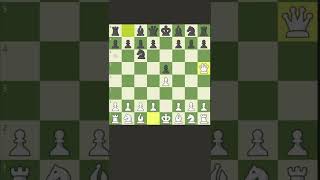
This video provides an excellent visual introduction to some basic checkmate concepts, complementing the detailed strategies we'll explore here. Watch it to get a good foundational understanding before we dive into the specific techniques.
The Core Concept: Understanding Checkmate & Setup
Before we delve into the 'how-to', it's crucial to solidify our understanding of what a checkmate truly is, and how it differs from other game endings like stalemate. In chess, the objective is to 'checkmate' your opponent's king. This occurs when the king is under attack (in 'check') and has no legal move to escape the attack. This means:
- The King is in Check: An opponent's piece is directly threatening the king.
- No Escape Square: There is no adjacent square the king can move to that is safe from attack.
- No Blocking Move: No other piece can move in between the attacking piece and the king to block the check.
- No Capturing the Attacker: The king or another piece cannot capture the attacking piece.
If all four conditions are met, it's checkmate, and the game ends. The player who delivers the checkmate wins.
Now, let's contrast this with a 'stalemate', which is a common pitfall when trying to deliver checkmate, especially with large material advantages. A stalemate occurs when the king is NOT in check, but the player whose turn it is has no legal moves available for any of their pieces. In this scenario, the game is a draw. This is why learning precise checkmate techniques is so vital – you want to win, not draw by accident!
For the purpose of basic checkmates, we'll primarily focus on scenarios where one side has significantly more material (e.g., a Queen and King, or a Rook and King) against a lone enemy King. The 'setup' for these checkmates typically involves getting your king into an active position to support your major piece, and then systematically restricting the enemy king's movement until it's forced into a corner or edge of the board where checkmate can be delivered. Understanding these basic rules and distinctions is your first step towards becoming a more effective chess player.
Essential Checkmate Strategy Guide: Patterns for Victory
Mastering basic checkmates is all about understanding patterns and applying systematic methods. Forget random checks; we're going for precision. Here are the fundamental checkmate patterns every Malaysian chess player should know:
1. Queen and King vs. Lone King (Q+K vs K): The 'Boxing' Method
This is arguably the most common and easiest checkmate to learn once you understand the concept. The Queen, being the most powerful piece, can effectively 'box in' the enemy king. Your goal is to use your Queen to create an ever-shrinking box around the enemy King, driving it to the edge of the board, while your King supports the Queen to deliver the final blow.
- Step 1: Cut off the King. Use your Queen to immediately cut off the enemy King from a large portion of the board. For example, if the enemy King is on e5, place your Queen on e2. This immediately restricts the King to ranks 1-4.
- Step 2: Shrink the Box. Move your Queen to reduce the King's available squares, always maintaining a 'knight's move' distance from the enemy King (to avoid being captured). Think of the Queen drawing a line, and the King cannot cross it.
- Step 3: Bring Your King. Once the enemy King is confined to a smaller area (e.g., the last two ranks), bring your King closer to support the Queen. Your King's role is crucial in cutting off escape squares that the Queen cannot cover.
- Step 4: Opposing Kings & Checkmate. Position your King directly opposite the enemy King (with one square between them) on the same rank or file. This is known as 'opposition'. With your King in opposition, your Queen can then deliver the checkmate on the adjacent square, as the King covers the escape squares next to the enemy King.
Key Principle: Always keep the Queen a knight's move away from the enemy King to prevent capture, and use your King to protect your Queen and block escape routes.
2. Rook and King vs. Lone King (R+K vs K): The 'Staircase' or 'Boxing' Method
Similar to the Queen, the Rook can also 'box' the enemy King, but it requires more precise coordination with your own King due to the Rook's more limited movement. The strategy is to push the enemy King to one of the edges of the board.
- Step 1: Cut off the King. Use your Rook to immediately cut off the enemy King from a large portion of the board, similar to the Queen. Place the Rook on a rank or file, restricting the King to one side.
- Step 2: Bring Your King. Your King is essential here. It needs to be actively involved, protecting the Rook and cutting off the enemy King's escape squares. Move your King towards the enemy King, maintaining opposition whenever possible.
- Step 3: Shrink the Box (with King Support). Once your King is close, use your Rook to push the enemy King one rank or file at a time towards the edge. Your King will block the squares next to the enemy King, preventing it from escaping to the center.
- Step 4: Checkmate on the Edge. Once the enemy King is on the last rank or file, bring your King into opposition, and then deliver checkmate with the Rook on the adjacent rank/file.
Key Principle: The King and Rook work as a team. The Rook draws the 'line', and the King enforces it by taking away squares. Always aim for opposition with your King.
3. Two Rooks vs. Lone King (2R vs K): The 'Ladder Mate'
This is one of the easiest checkmates to execute and is often taught first because of its straightforward nature. It's called the 'Ladder Mate' because your Rooks resemble rungs of a ladder, pushing the enemy King down one rank at a time.
- Step 1: Separate the Rooks. Position your two Rooks on separate ranks or files, preferably with one rank/file between them.
- Step 2: Force the King. Use one Rook to deliver a check, pushing the enemy King to the next rank/file.
- Step 3: Switch Rooks. Move the *other* Rook to the newly vacated rank/file, delivering another check and pushing the King further.
- Step 4: Repeat until Checkmate. Continue this 'ladder' action, alternating Rooks, until the enemy King is forced to the edge of the board and checkmated.
Key Principle: Keep your Rooks coordinated, one supporting the other, always maintaining a safe distance from the enemy King while relentlessly pushing it back. Ensure your Rooks are on separate ranks/files for maximum effect and to avoid blundering one.
Avoiding Stalemate: A Crucial Warning
In all these checkmates, especially with the Queen or a single Rook, be extremely careful not to accidentally stalemate your opponent. This happens when the enemy King is NOT in check, but has NO legal moves. Always double-check if your opponent's King has any safe squares to move to before delivering what you think is the final check. A common mistake is to restrict the King too much without delivering a check.
Odds & Statistics: The Power of Endgames
While chess isn't a game of chance like many casino games, understanding the 'odds' of converting an advantage into a win, and the statistical likelihood of specific endgames, is crucial for strategic play. Mastering basic checkmates dramatically increases your conversion rate in advantageous endgames.
According to FIDE (World Chess Federation) training materials and various endgame theory books (such as those by Jeremy Silman), the theoretical win rate for a player with a Queen and King against a lone King is 100% if played perfectly. Similarly, for a Rook and King against a lone King, it's also 100%. The challenge, however, lies in human execution, especially under time pressure or inexperience.
| Checkmate Type | Difficulty for Beginners | Average Moves (Optimal) | Beginner Success Rate (without practice) | Beginner Success Rate (with practice) | Time to Learn (est.) |
|---|---|---|---|---|---|
| Queen + King vs. King | Low | 9-15 | 50-60% (due to stalemates) | 95%+ | 30 mins - 1 hour |
| Rook + King vs. King | Medium | 10-18 | 40-50% (due to stalemates) | 90%+ | 1-2 hours |
| Two Rooks vs. King | Very Low | 7-10 | 80-90% | 99%+ | 15-30 mins |
| Two Bishops vs. King | High | 15-25 | 5-15% | 60-70% | 3-5 hours |
| Bishop + Knight vs. King | Very High | 30-50+ | <5% | 20-30% | 10+ hours |
| King + Pawn vs. King | Medium | Varies (depends on position) | 30-70% | 80%+ | 1-2 hours |
As you can see from the table, the 'Beginner Success Rate' without practice for Q+K vs K and R+K vs K is surprisingly low, primarily due to the common blunder of stalemate. However, with dedicated practice, these rates skyrocket to near-perfect. This highlights the immense value of deliberately learning and drilling these patterns.
The average number of moves to deliver these checkmates (assuming optimal play from both sides) is also quite low, meaning that once you understand the method, you can finish the game quickly and efficiently. This saves mental energy and prevents blunders that can occur in prolonged endgames. Investing your time in these basic checkmates is not just about winning more; it's about gaining efficiency and confidence in your endgame play, turning potential draws into definite wins.
How to Play: Step-by-Step Application of Checkmate Patterns
Let's walk through detailed, practical steps for executing the most common basic checkmates. Remember, practice is key. Try these out against a computer or a friend, focusing on the method rather than just trying to win.
1. Queen and King vs. Lone King (Q+K vs K) - The 'Boxing' Method in Action
Imagine your opponent's King is on e5, and your Queen is on a1, your King on g1. Here's how to proceed:
- Initial Cut-off: Move your Queen to e2. The enemy King is now restricted to ranks 1-4.
- Shrink the Box (First Side): Move your Queen to d3. The King is still on e5. Now it's restricted to ranks 1-3. Or, if the King moves to d4, you can move Queen to c3. The idea is to keep the Queen one square away from the King diagonally or vertically, and always maintain the 'box'.
- Bring Your King: As the enemy King gets closer to the edge, start bringing your King towards the action. If the enemy King is pushed to rank 1, your King should be moving towards the 2nd or 3rd rank. For example, if the enemy King is on c1, your King should be on c3 or d2.
- Achieve Opposition: Maneuver your King so it's directly opposite the enemy King with one square in between. For example, if the enemy King is on a1, your King should be on a3 (or b2, b3, c2, c3 to block escape squares).
- Deliver Checkmate: Once your King is in opposition and covering the escape squares, use your Queen to deliver the final check. If the enemy King is on a1, your King on a3, you can play Qa2#. The Queen checks, and your King covers b1 and b2.
Crucial Tip: Always be mindful of stalemate! If the enemy King has no legal moves but is not in check, it's a draw. For example, if the enemy King is on a1, your King on c2, and your Queen on b3, it's stalemate because the King has no moves, but it's not in check.
2. Rook and King vs. Lone King (R+K vs K) - The 'Staircase' Push
Let's say the enemy King is on d5, your Rook on a1, and your King on g1.
- Initial Cut-off: Move your Rook to a4. The enemy King is now restricted to ranks 1-4. (If the King moves to e5, you might play Ra5).
- Bring Your King Closer: Start moving your King towards the enemy King. Your King's primary role is to protect your Rook and block escape squares. Aim to get your King to within a 'knight's move' of the enemy King.
- Achieve Opposition: This is key. Maneuver your King to be in opposition with the enemy King. For example, if the enemy King is on c1, try to get your King to c3.
- Push with the Rook: Once your King is in opposition, use your Rook to check the enemy King. If the enemy King is on c1, your King on c3, you can play Rb1+. The King must move to a file (a or d).
- Maintain Opposition and Push: Continue to use your King to maintain opposition, and your Rook to push the King along the rank or file. If the King moves to d1, you move your King to d3, then play Rc1+. This systematic pushing will force the King to the edge.
- Deliver Checkmate: Once the enemy King is on the last rank (e.g., a1), and your King is in opposition (a3), deliver checkmate with your Rook (e.g., Ra2#).
Remember: The Rook needs the King's help much more than the Queen does. Never leave your Rook undefended if the enemy King can capture it. Always keep your King active and close to the action.
3. Two Rooks vs. Lone King (2R vs K) - The 'Ladder Mate'
This one is very straightforward. Let's imagine your Rooks are on a1 and h1, and the enemy King is on e5.
- First Check: Move one Rook (e.g., Ra5+). The enemy King must move to rank 6, 7, or 8 (e.g., to f6).
- Second Check: Move the *other* Rook to the next rank (e.g., Rh6+). The enemy King is now forced to move to rank 7 or 8 (e.g., to g7).
- Continue the Ladder: Alternate Rooks, always moving the un-checking Rook to the next available rank, delivering a check. So, after Rh6+, you'd play Ra7+. The King is forced to h8.
- Final Checkmate: Deliver the final checkmate with the other Rook (e.g., Rh8#).
This method is simple and effective. Just ensure your Rooks are protected and don't block each other's path. It's truly like climbing a ladder for your Rooks, pushing the enemy King one step at a time to its doom.
Expert Verdict: Why Basic Checkmates are Your Game-Changer in Malaysia
As a Lead Strategy Analyst and an avid chess player myself, I can confidently say that mastering these basic checkmates is not just recommended, it's absolutely essential for any aspiring chess player, especially here in Malaysia where the chess scene is growing rapidly. From casual games with friends at the mamak to competitive tournaments organised by the Malaysian Chess Federation, the ability to convert a material advantage into a decisive win is what separates a good player from a great one.
My expert recommendation is clear: dedicate significant practice time to these fundamental endgame patterns. Don't just read about them; set them up on a board or use online chess puzzles and practice delivering the checkmate repeatedly until it becomes second nature. Focus on the King and Queen vs. King and the Rook and King vs. King scenarios first, as these are the most common and teach invaluable coordination skills. The Two Rooks 'Ladder Mate' is an excellent starting point due to its simplicity.
The reasoning is simple: without this skill, all your brilliant opening moves and tactical mid-game maneuvers can go to waste. It's like building a magnificent house but forgetting to put on the roof – incomplete and vulnerable. These checkmates are your 'roof'. They ensure that when you've done the hard work of gaining an advantage, you can close out the game efficiently and confidently. Moreover, understanding these endgames will also improve your mid-game planning, as you'll be able to visualize potential checkmate scenarios much earlier.
So, whether you're playing at a local club in Kuala Lumpur, challenging friends in Penang, or participating in a national event, these basic checkmate skills will be your most reliable tool for securing victory. Practice, learn, and dominate the board!